

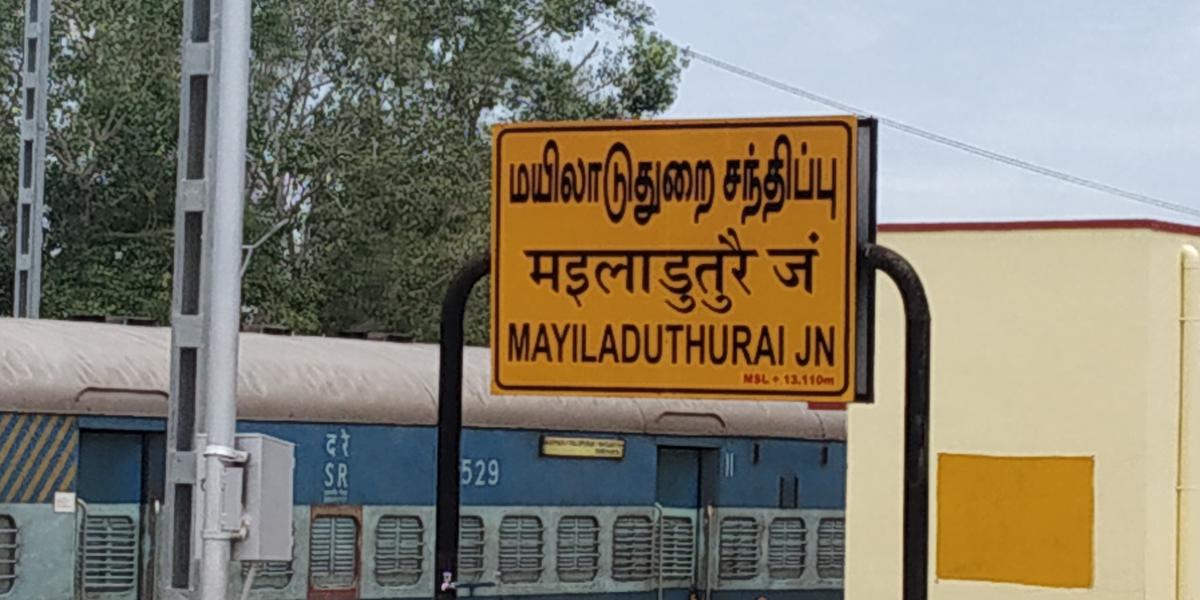
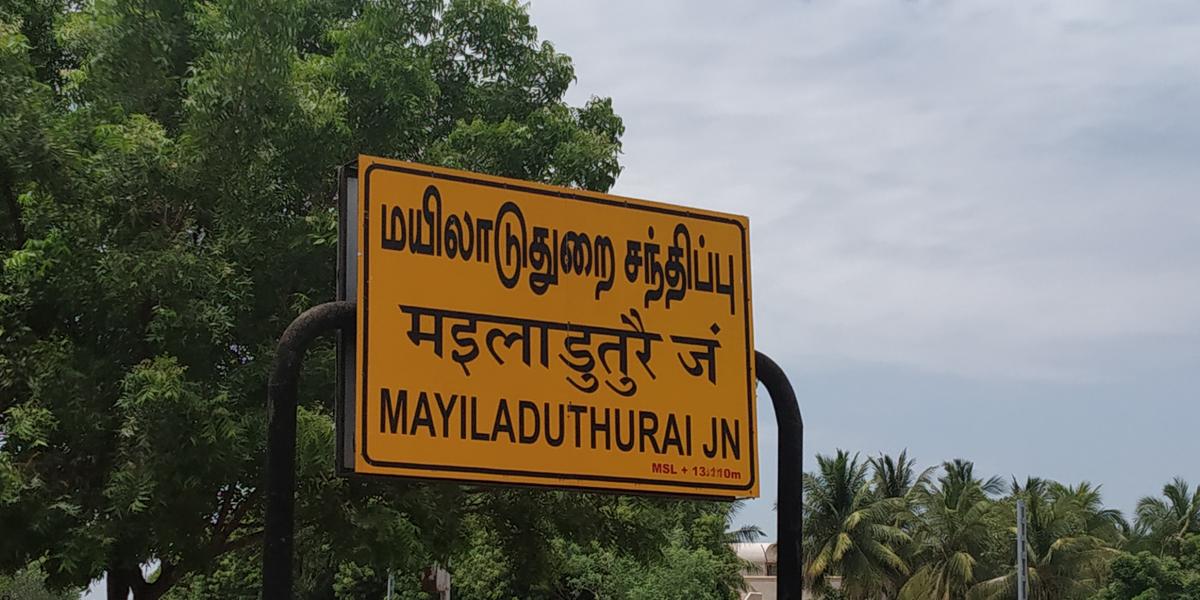
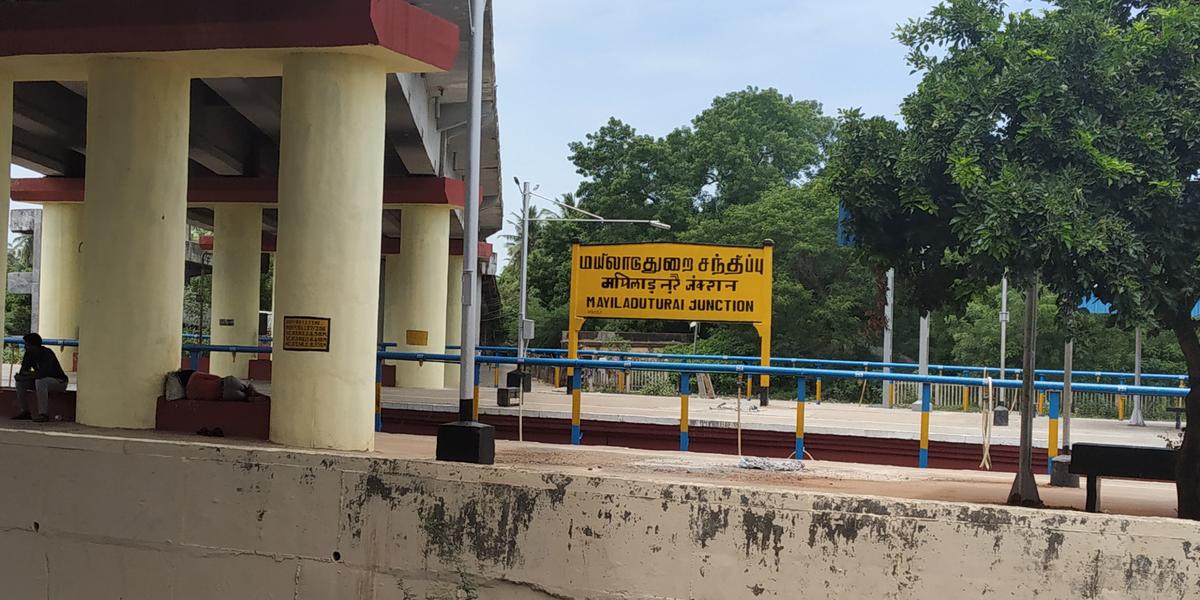
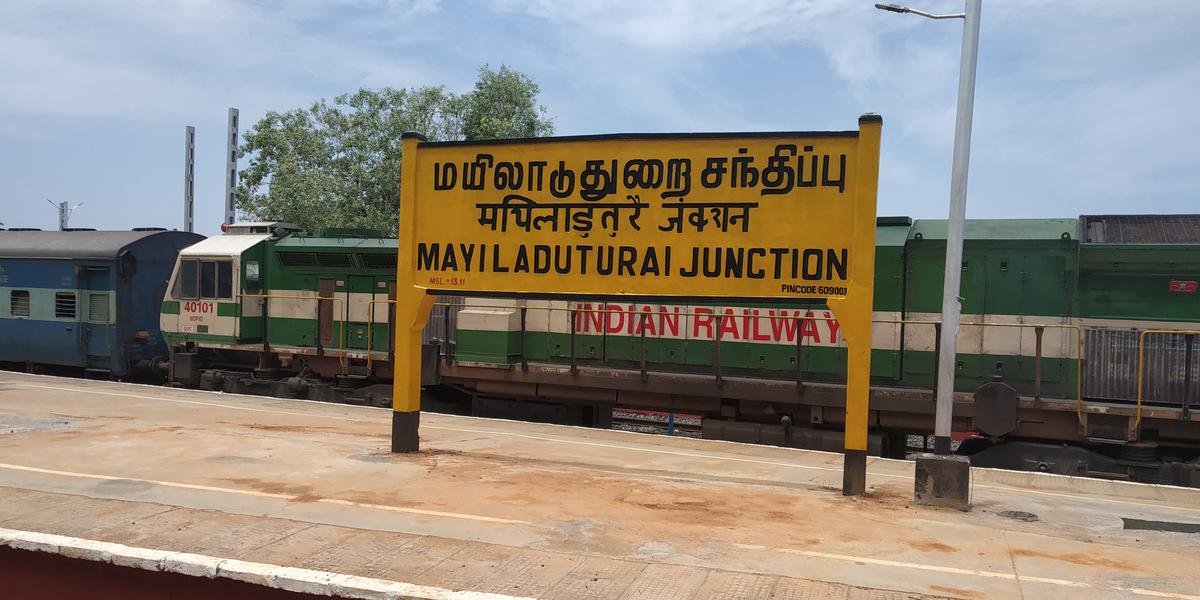
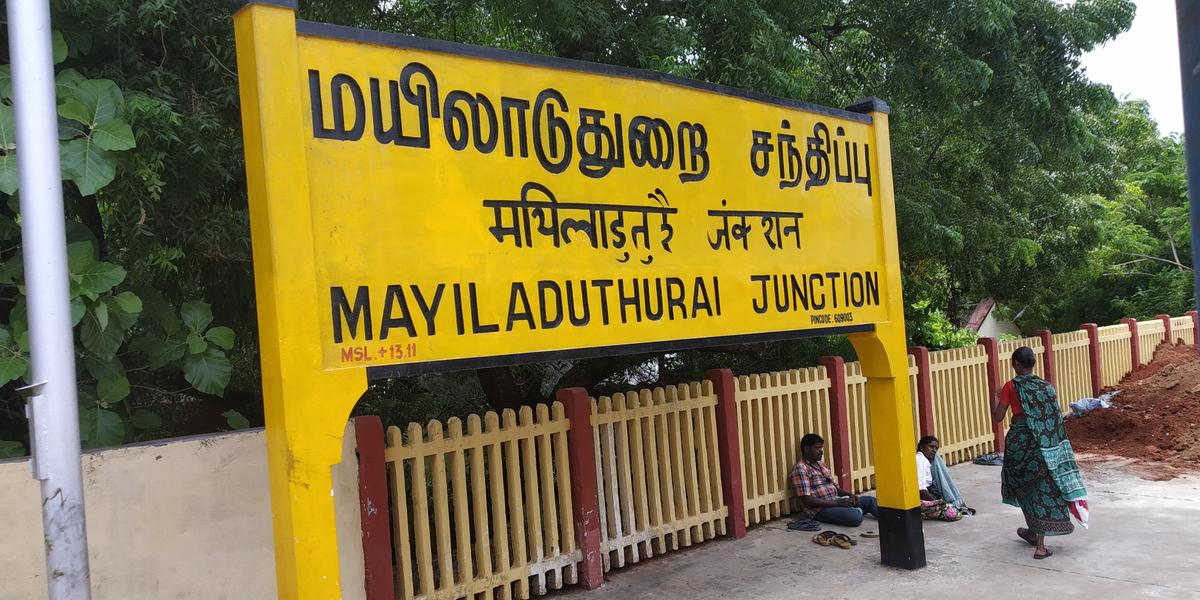
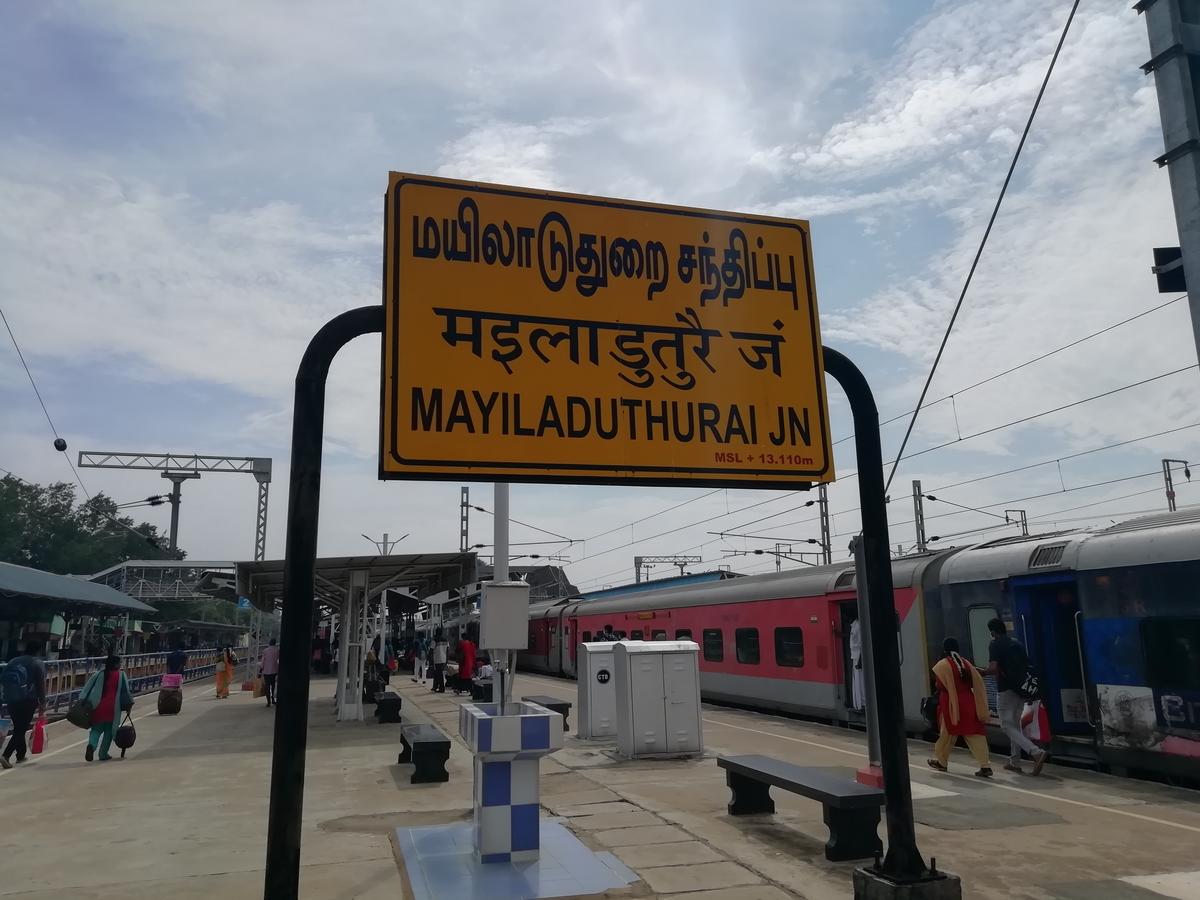
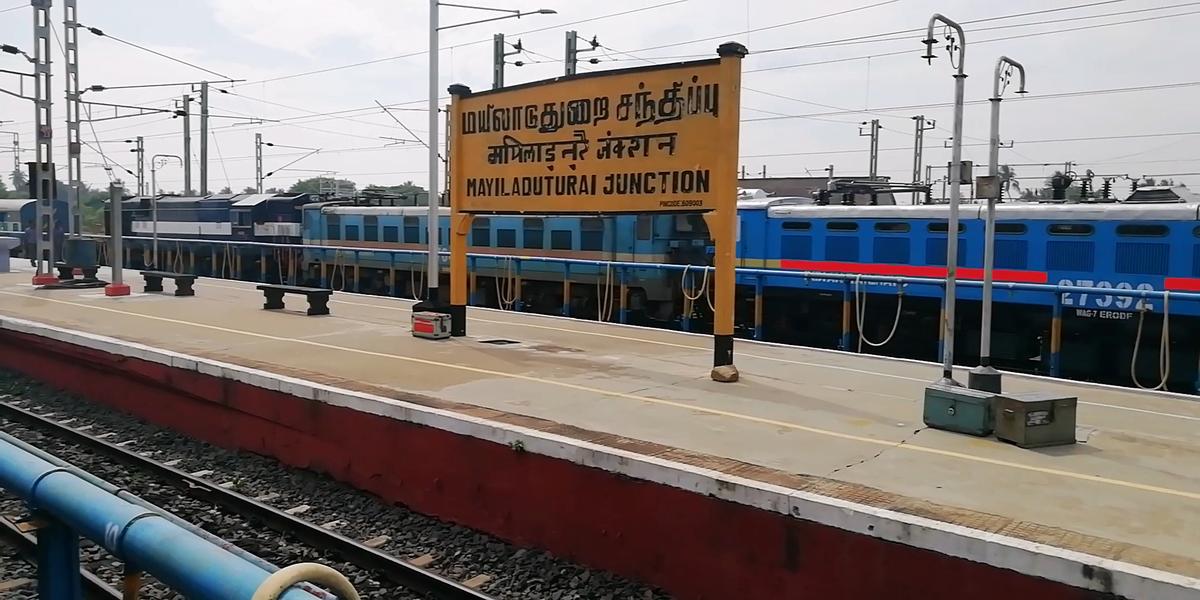
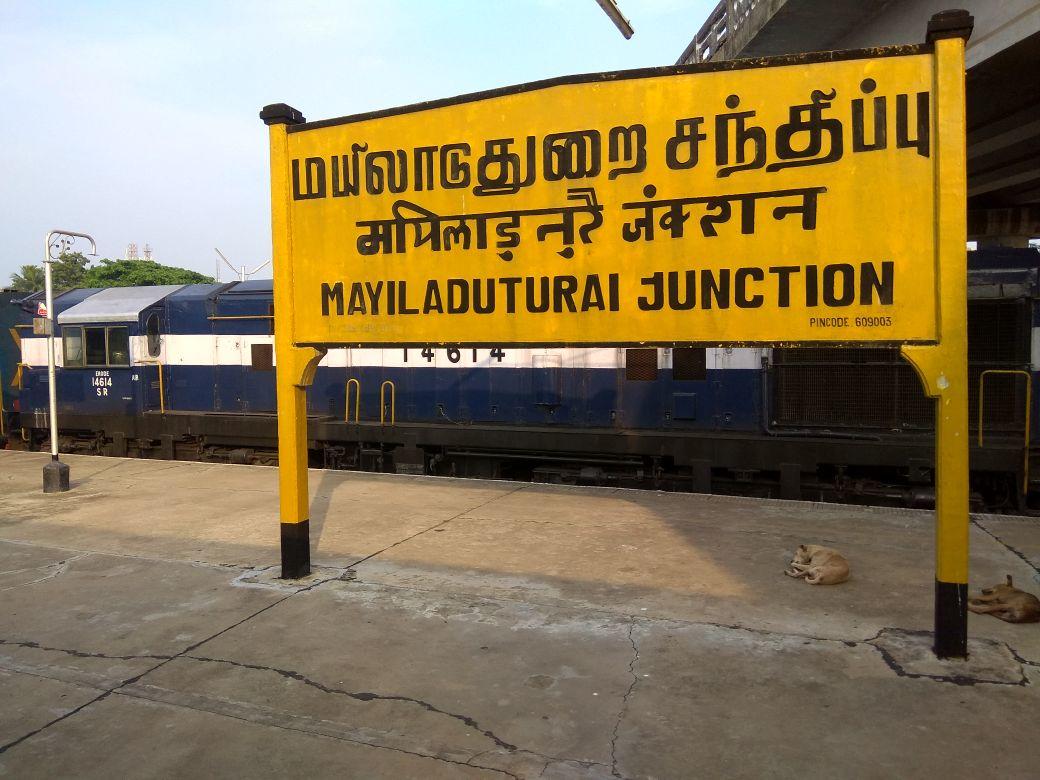
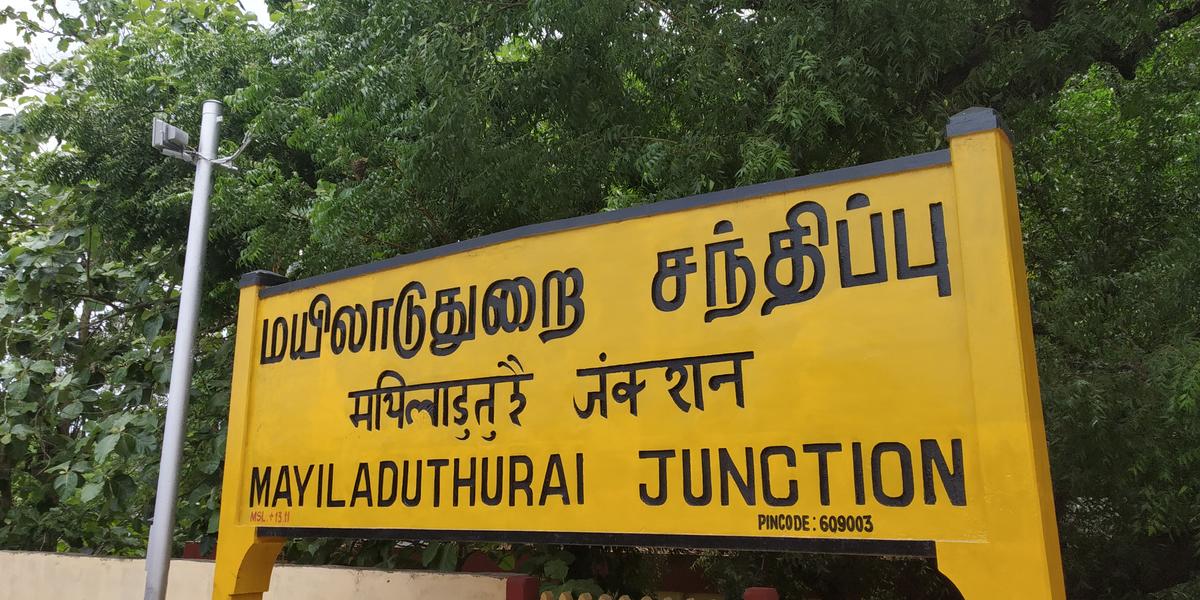
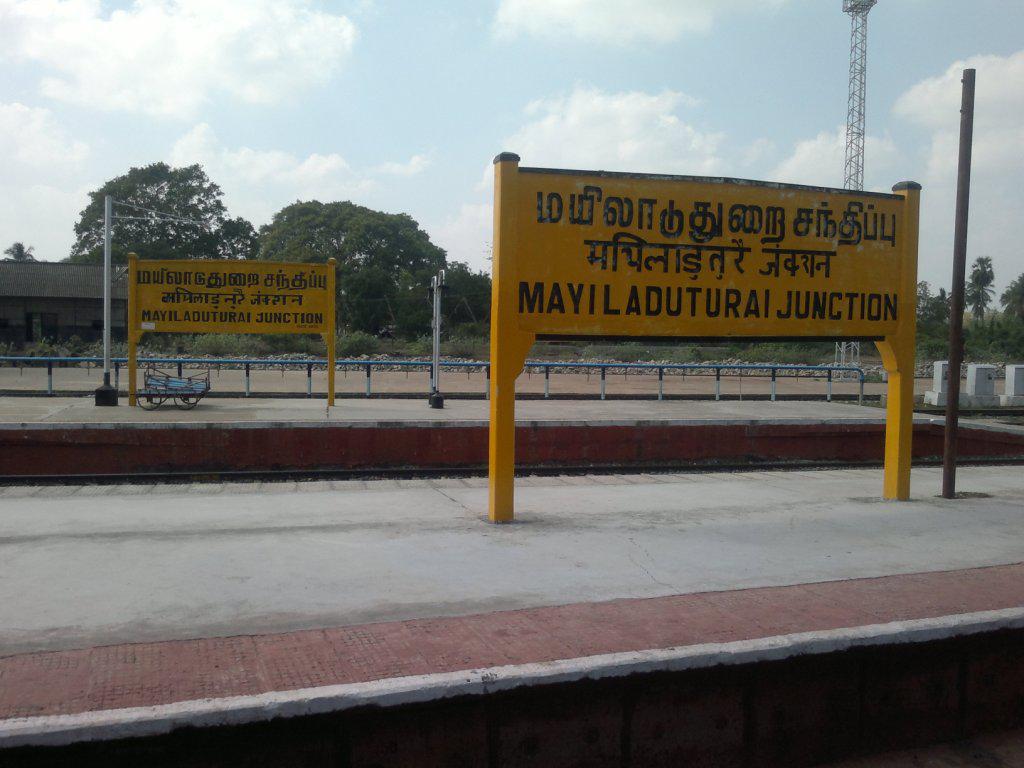
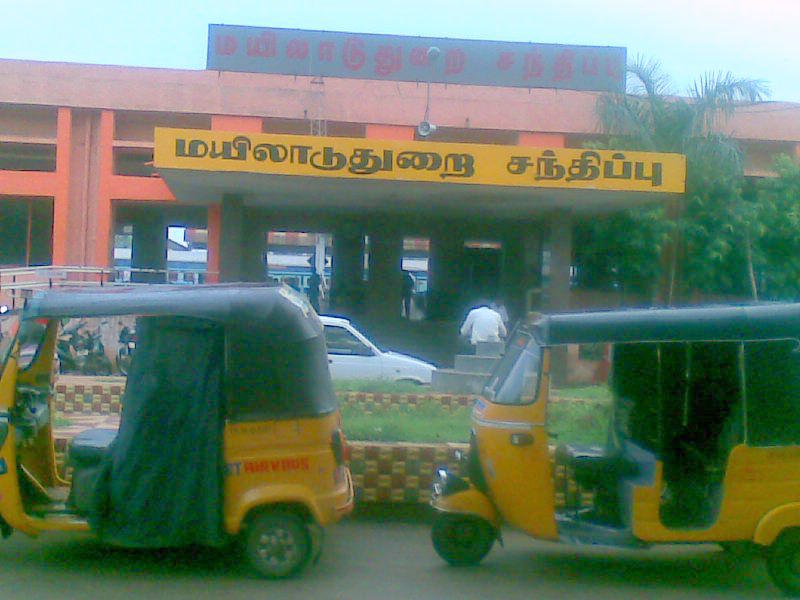
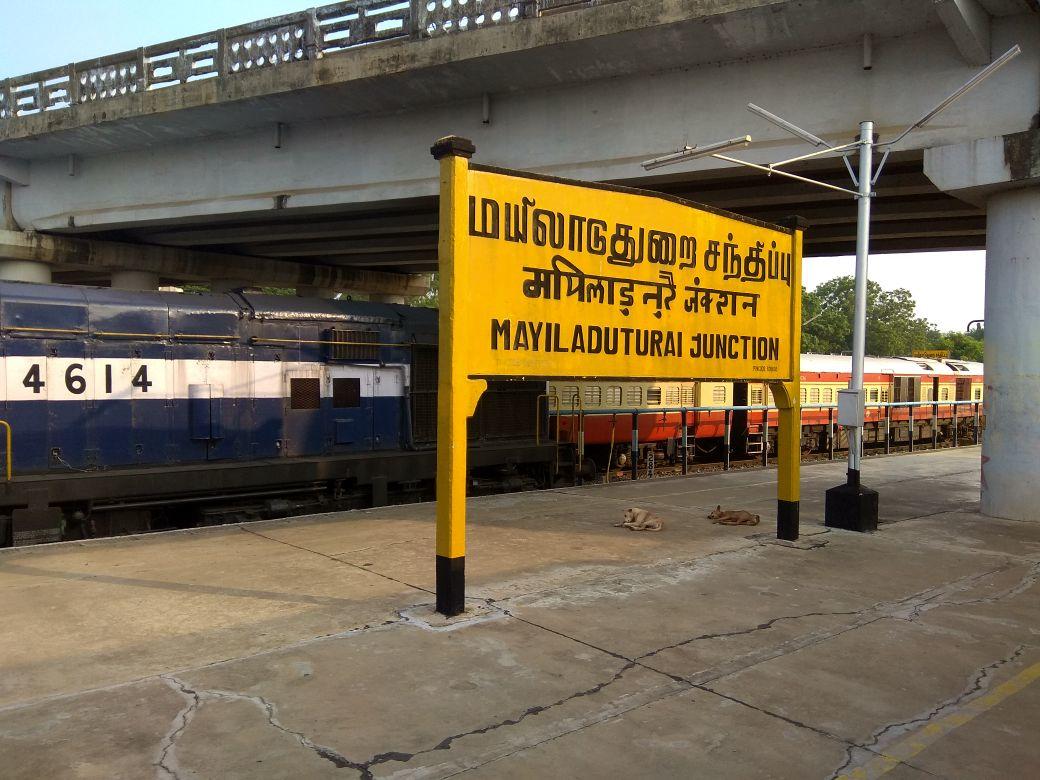
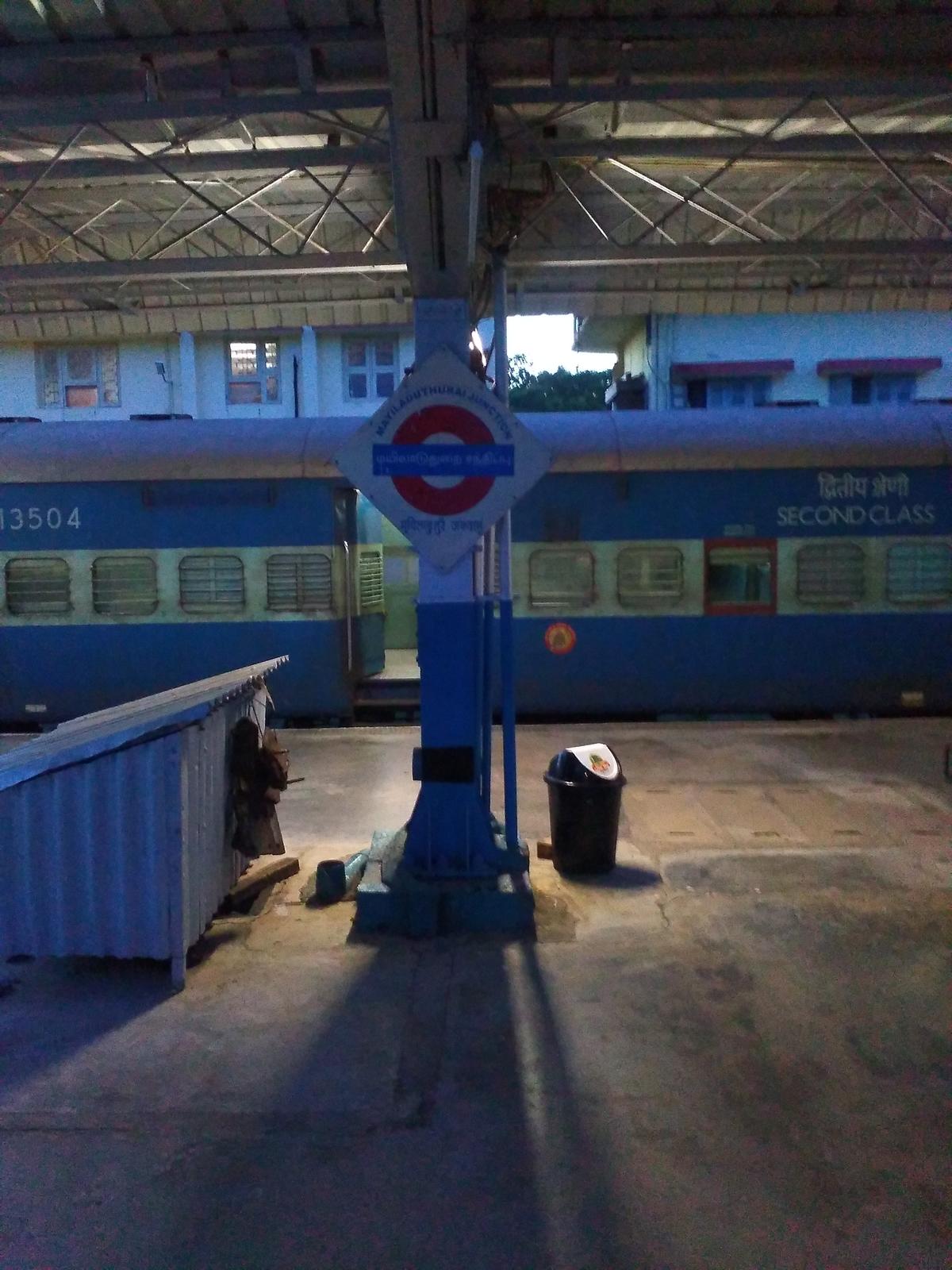
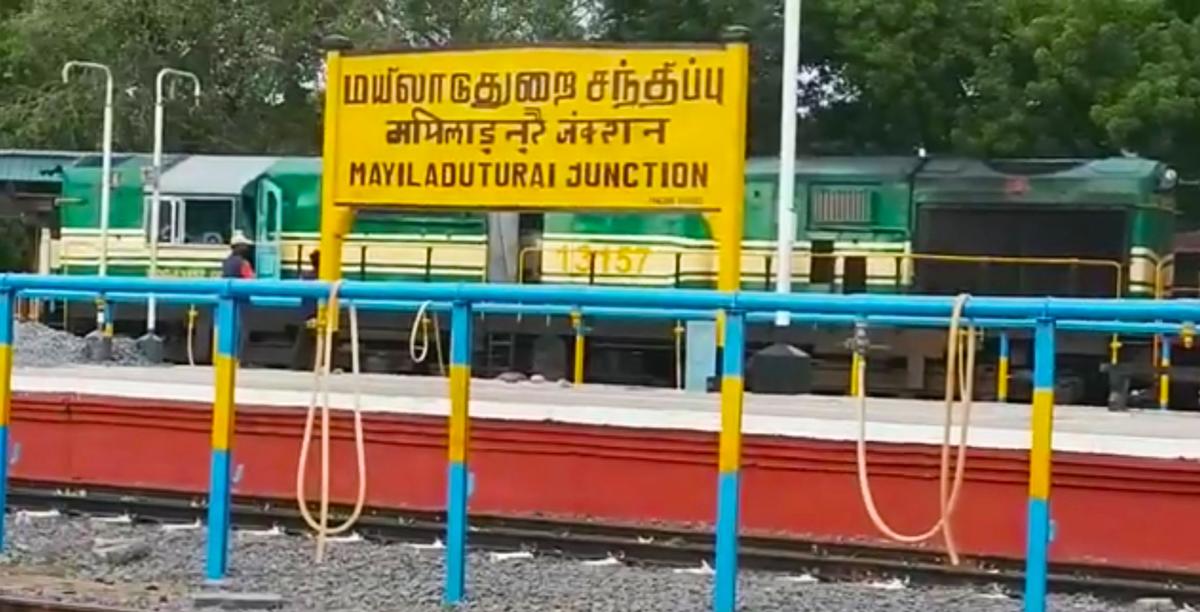
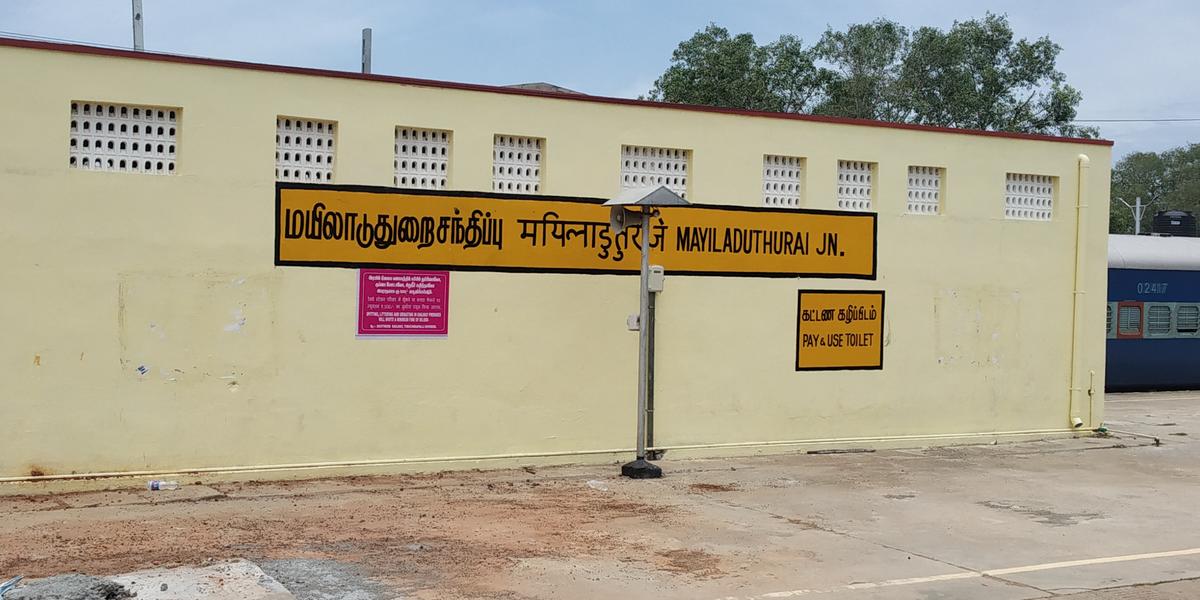
If you look at a railway map of Tamil Nadu, Mayiladuthurai Junction stands out not because it is big, but because of where it sits. Located on the Chennai Egmore to Thanjavur main line, it connects some of the most important temple towns and delta regions in the state. The station has five platforms and falls under the NSG 3 category of Southern Railway, handling a steady flow of passengers every day.
You will find a mix of express trains, passenger services, and several trains that either start or end here. Its importance goes back to the metre gauge era of the South Indian Railway, which helped shape its role as a junction. Even today, it works as a key link between mainline routes and interior connections across this region.
About Mayiladuthurai Junction Railway Station
Mayiladuthurai may not be a big city, but its railway station has been doing serious work for a very long time.
Mayiladuthurai Junction, station code MV, was earlier called Mayavaram Junction. The name changed, but the role did not. This is one of those stations that quietly handles multiple responsibilities without making a big deal about it.
It is not just a stop where trains pause and move on. It is a proper junction, which means routes split and connect here. Some trains pass through, some wait longer, and a fair number actually start or end their journey here. That mix keeps the station active in a steady, almost predictable way.
Location and Railway Connectivity
If you open a railway map of Tamil Nadu, the reason this station matters becomes obvious.
It sits on the Chennai Egmore to Thanjavur main line, which connects the state capital region to the Cauvery delta. That alone would make it important, but what really adds to its role is how it links nearby towns.
Places like Kumbakonam, Sirkazhi, and Nagapattinam depend on this stretch, and Mayiladuthurai ends up acting like a connector between them. You might not plan your journey around this station, but if you are traveling across this region, there is a good chance your train will pass through it.
It is less of a destination and more of a link that keeps everything moving.
Historical Background of the Station
This station did not just appear when modern railways expanded. Its roots go back to the late 1800s, during the time of the South Indian Railway Company.
The main line through this region was operational by 1877, and by 1894, Mayavaram had already become a junction with branch lines extending outwards. Back then, everything was metre gauge, and the network was built to connect towns, ports, and agricultural regions.
There was even a line towards Tharangambadi that opened in 1926 and later closed in 1987. Even though that route is no longer active, it tells you something about how important this location once was in the network.
Today, the tracks are broad gauge, but the station still follows the same logic it was built on over a century ago. Connect routes, keep trains moving, and serve the region.
Station Layout and Platform Structure
The layout here is simple, and honestly, that is a good thing.
There are five platforms, and they are arranged in a way that supports both passing trains and those that stop for longer durations. Since this is a busy main line, trains need to keep moving, and the station is designed with that in mind.
If you have ever been to stations where you feel like you need directions every five minutes, this is not one of them. In fact, it feels more straightforward compared to places like Karjat Railway Station, where multiple routes and junction movements can make navigation a bit more involved.
It may not look modern or polished, but it works. And when it comes to railway stations, that matters more than fancy design.
Passenger Facilities and Amenities
Mayiladuthurai Junction is classified as an NSG 3 station, so the facilities are what you would expect from a station that sees steady traffic but is not a major metro hub.
You will find waiting areas, ticket counters, basic food stalls, drinking water, and foot overbridges to move between platforms. Nothing feels excessive, but nothing essential is missing either.
It is the kind of station where things are functional. You get what you need, and you move on.
Train Operations and Traffic Flow
The activity here is consistent rather than overwhelming.
On an average day, the station handles around 70 plus train movements, including arrivals and departures. About 14 trains originate here and a similar number terminate here. The rest pass through as part of longer routes.
What this means in real terms is that there is almost always something happening, but it rarely feels chaotic. You will see trains coming and going at regular intervals, but without the kind of pressure you find in larger junctions.
Station Classification and Operational Importance
Mayiladuthurai Junction falls under the NSG 3 category in Indian Railways, which basically means it has a steady passenger base and operational importance.
It may not compete with major city stations in terms of scale, but in this part of Tamil Nadu, it plays a key role. It connects temple towns, supports daily commuters, and keeps regional travel practical.
In a way, it does the kind of work that bigger stations depend on but do not always show.
Passenger Movement and Accessibility
One thing you will notice quickly is that movement is straightforward.
The platforms are connected through a foot overbridge, and the overall layout does not force you to take long or confusing routes. Even during busier times, the crowd is manageable.
If you are someone who worries about missing trains because of confusing station layouts, this place is relatively easy to handle.
Future Scope and Development
Like most stations in the Southern Railway network, Mayiladuthurai Junction is part of gradual improvements rather than sudden transformations.
The big shift from metre gauge to broad gauge has already happened, which improved connectivity across the region. Future changes are usually focused on better facilities and smoother operations rather than dramatic redesigns.
There have been discussions in the past about reviving older routes, but those are long-term possibilities.
What is clear is this. As long as this region remains active in terms of travel, culture, and agriculture, this station will continue to matter.