

Krishnanagar, Ph: 03472-252872
District – Nadia
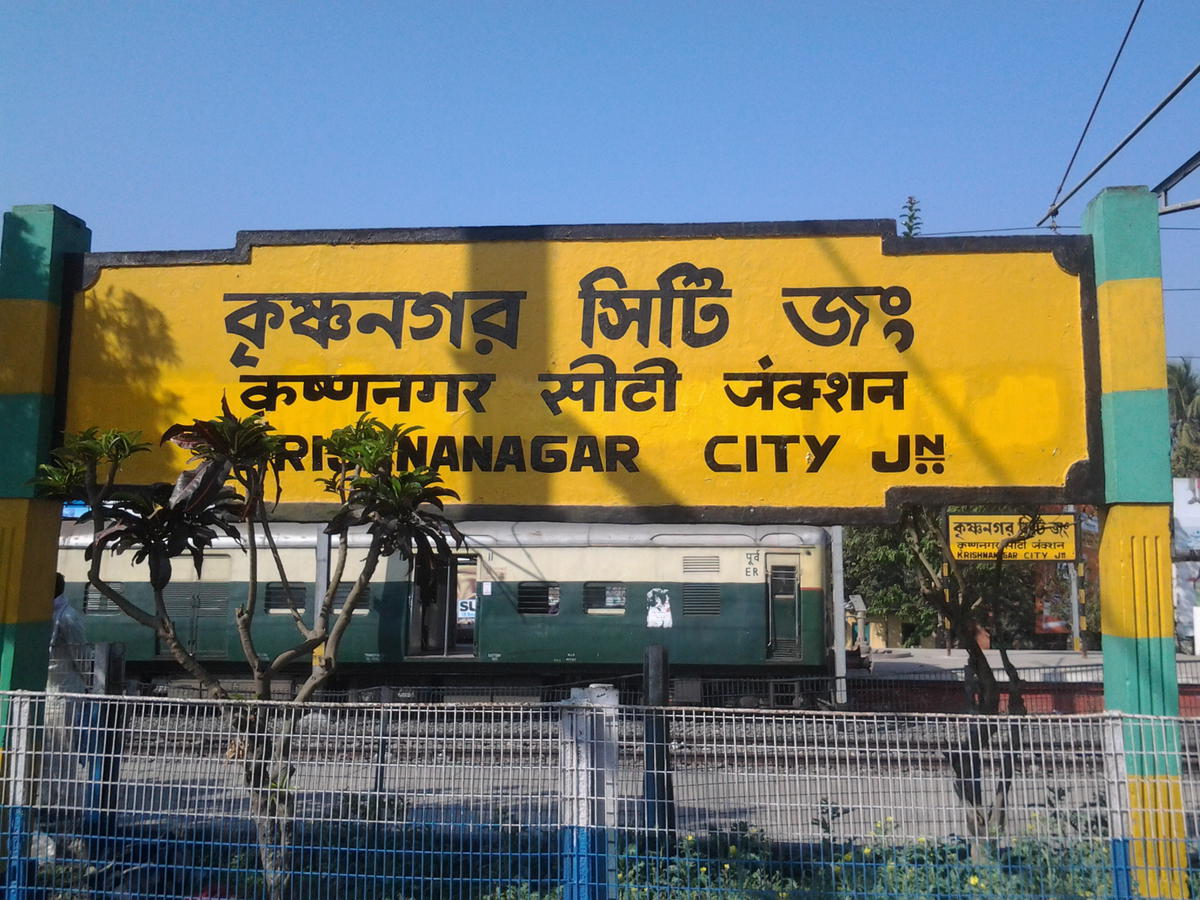
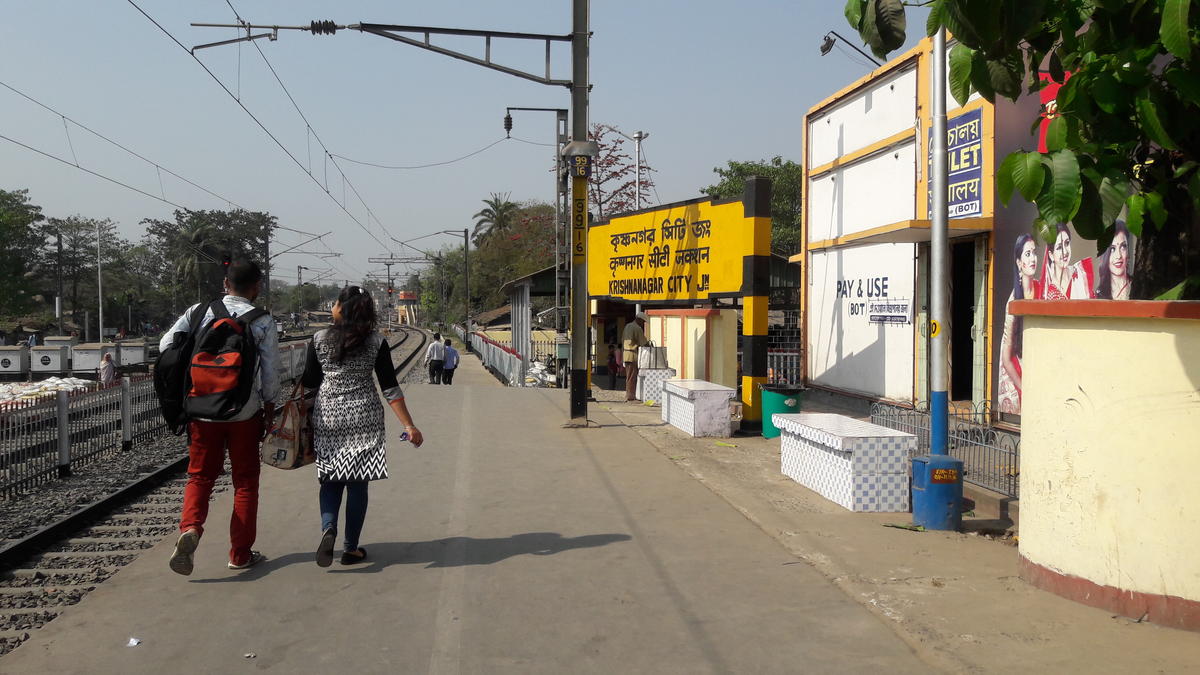
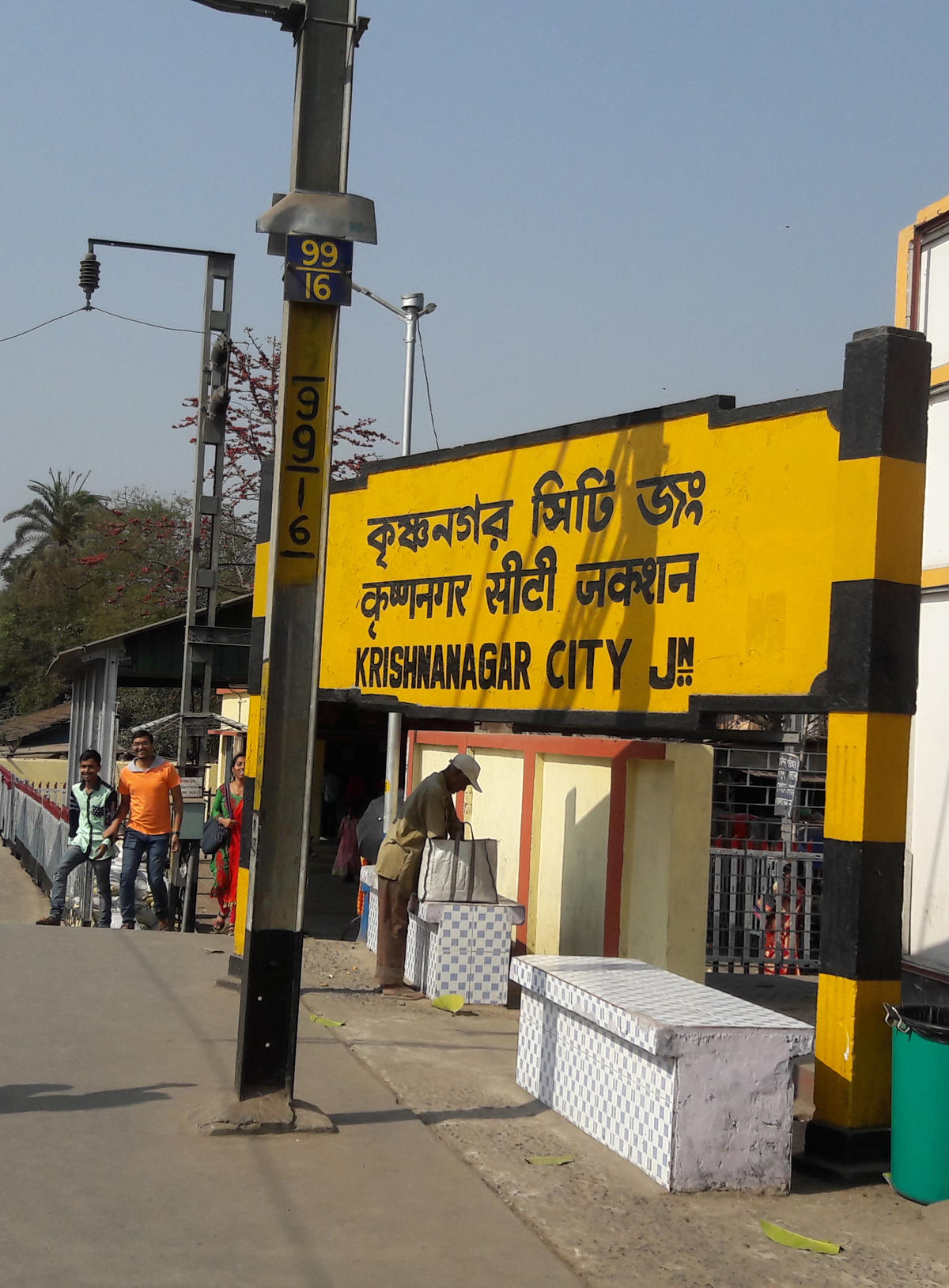
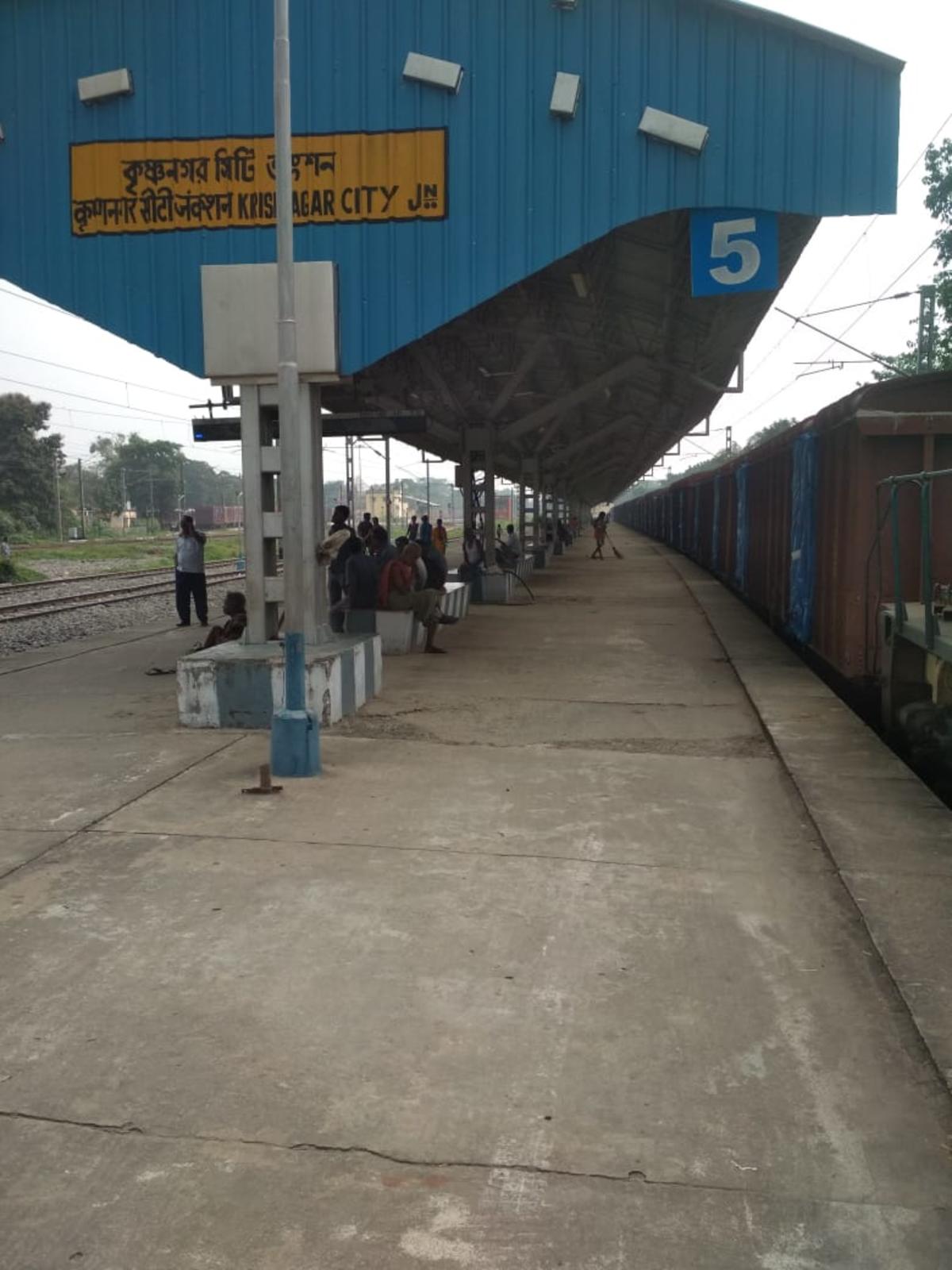
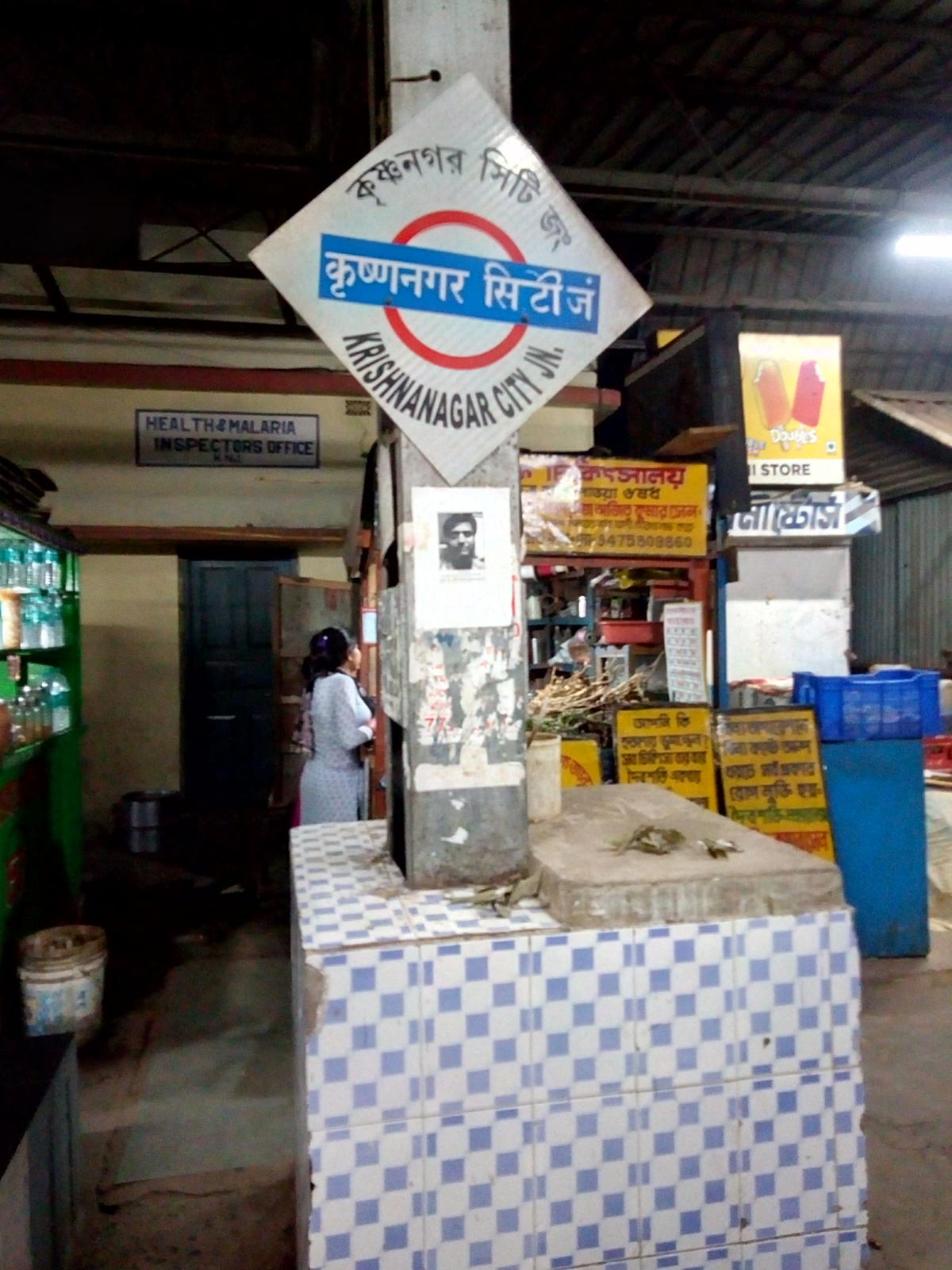
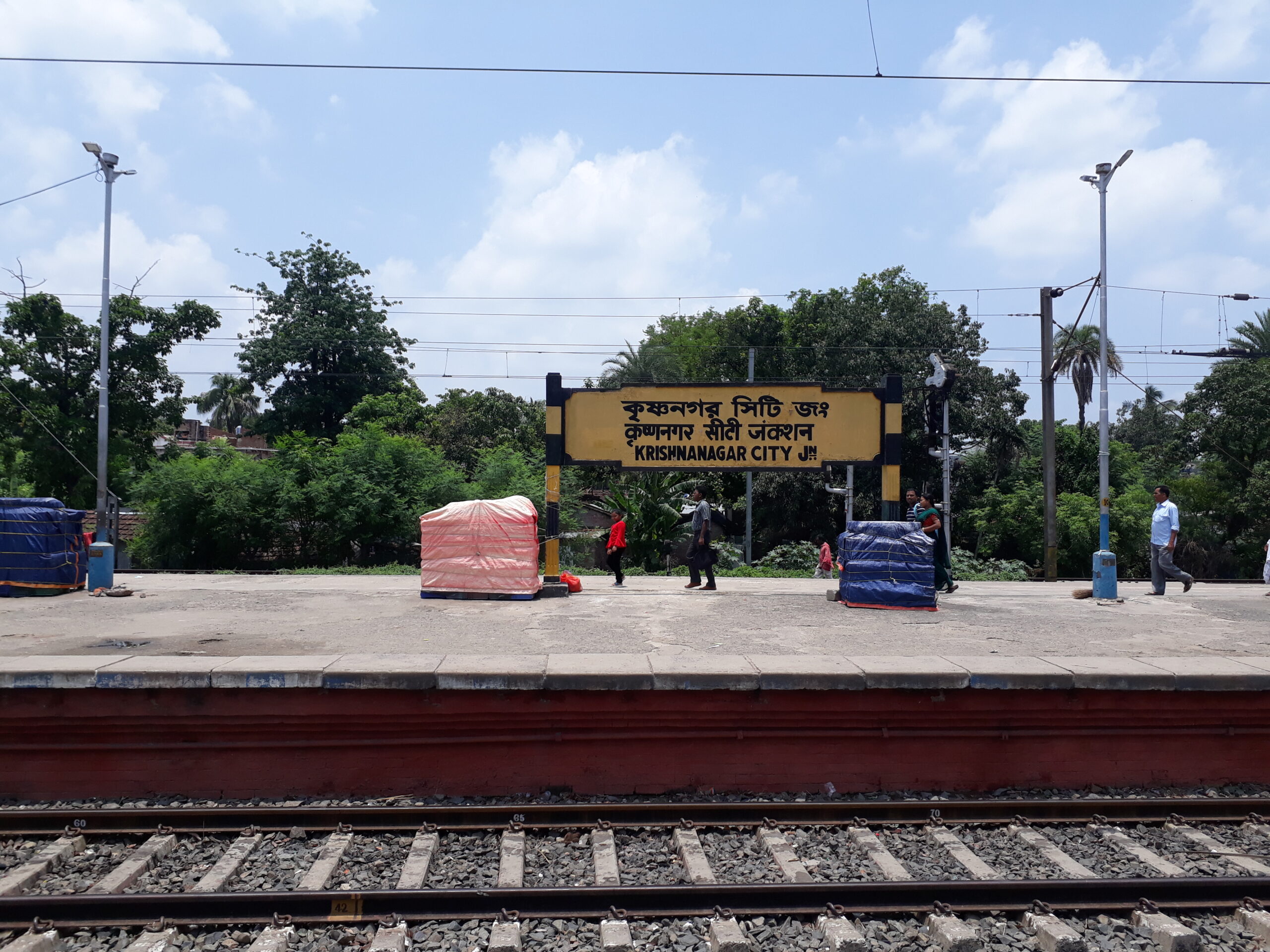
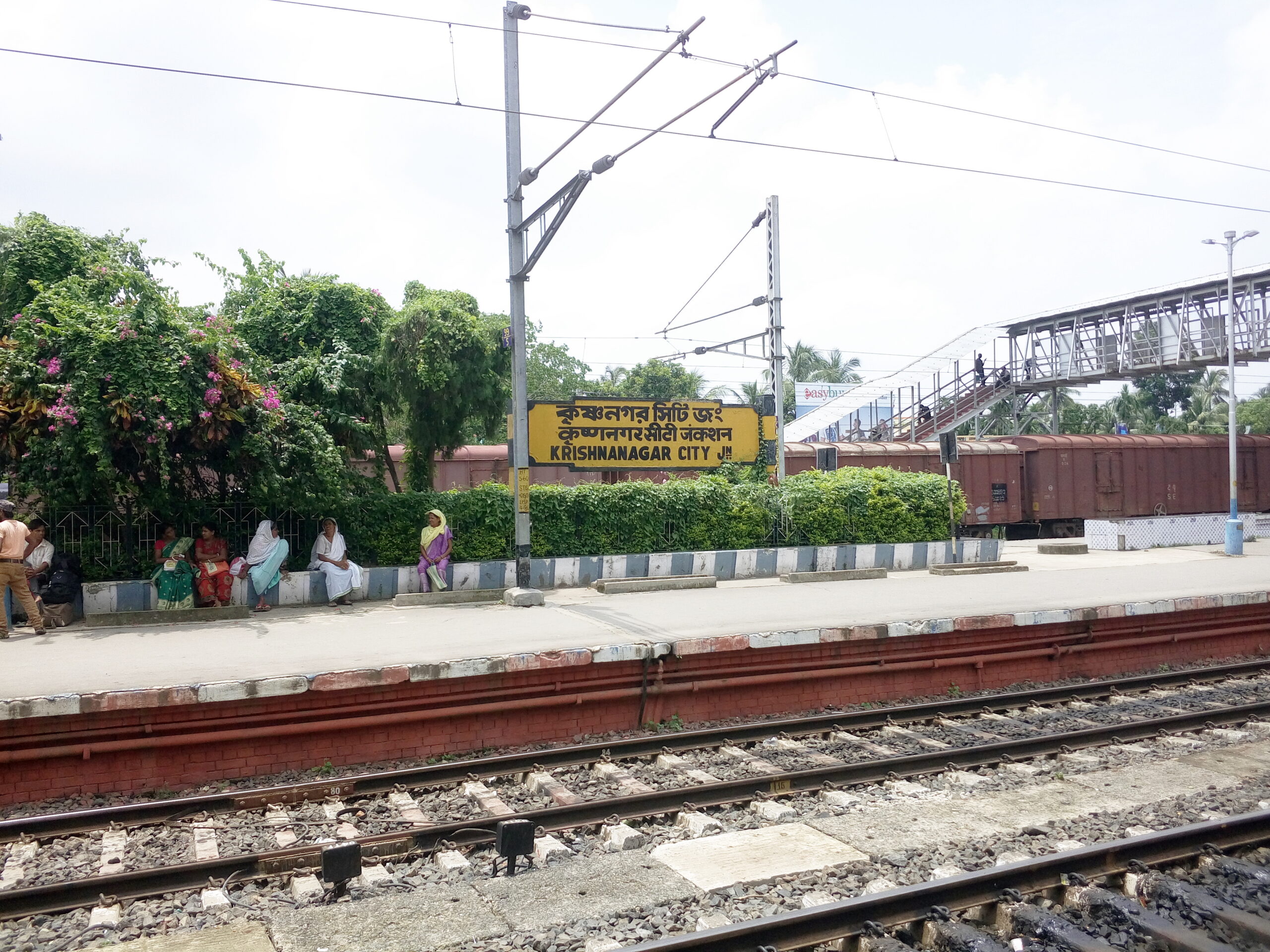
Krishnanagar City Junction railway station is one of the main railway points for Nadia district, connecting the town of Krishnanagar with Kolkata and nearby regions. The station comes under Eastern Railway and is part of the Sealdah suburban system, with a distance of roughly 100 kilometres from Sealdah railway station.
What makes this station important is its role as a junction. Routes from Ranaghat split here towards Shantipur and Nabadwip Ghat, so passengers from different towns rely on this point to change directions without going back to bigger stations. Regular EMU services form the backbone of movement here, especially for daily commuters
The station also supports travel to Nabadwip, which sees increased passenger movement during religious occasions. At the same time, a planned rail link towards Nabadwip Dham remains incomplete due to land acquisition issues, even though parts of the infrastructure have already been developed.
Location and Railway Connectivity
Krishnanagar City Junction is located in the town of Krishnanagar in Nadia district, and its importance comes directly from how the tracks are laid around it. It sits on the Ranaghat–Krishnanagar section of the Sealdah division, which connects it to Sealdah railway station, the main suburban gateway for Kolkata.
What makes this station stand out is the way routes branch out from here. One line continues towards Shantipur, while another heads towards Nabadwip Ghat. This means passengers from different towns do not need to travel backwards to bigger junctions just to change trains. In practical terms, it saves both time and effort, especially for daily commuters who already spend a good part of their day travelling.
Historical Background and Evolution
The station traces its origins back to the expansion of railway lines in eastern India under the old Eastern Bengal Railway network. These lines were built to connect important towns across the region, and Krishnanagar naturally became part of that plan due to its administrative and cultural importance.
Over the years, the role of the station changed. It was not just a stop on a line anymore. As suburban services from Sealdah expanded and branch routes developed, Krishnanagar slowly took on the role of a junction. Electrification of the Sealdah division further strengthened this shift, as EMU trains increased frequency and made daily travel more predictable.
You can still see that layered history today. The station has modern suburban activity, but the structure and flow still reflect an older railway design that has been adapted rather than completely rebuilt.
Station Layout and Platform Structure
The station layout is simple in a way that works in its favour.
There are multiple platforms handling both through trains and those that start or end here. Since it is a junction, some trains arrive and move forward, while others switch direction towards branch lines. The tracks are arranged to support this without creating unnecessary confusion.
For passengers, this means you are not constantly checking signs or asking for directions. Once you enter the station and look around, the flow becomes clear. The foot overbridge connects all platforms, and most people naturally use it to move across rather than taking risks on the tracks.
It is not a station where you feel lost. And if you have ever struggled in larger junctions like Guntur Junction Railway Station, you will notice how much easier it is to move around here without overthinking every step.
Passenger Amenities and On-Ground Experience
Facilities at Krishnanagar City Junction are straightforward and focused on daily use rather than comfort for long stays.
There are ticket counters for suburban services, basic waiting areas, drinking water points, and toilets. Small food stalls and local vendors are present, which is exactly what regular passengers rely on. You are more likely to find tea and snacks that people actually buy every day than fancy food options that look good but rarely get used.
It is the kind of station where things are placed for function. You come in, get what you need, and move towards your train without spending unnecessary time figuring things out.
Train Operations and Passenger Movement
The station sees steady movement throughout the day, largely driven by suburban EMU services.
Local trains connecting to Sealdah via Ranaghat form the backbone of operations. These trains run frequently and carry office workers, students, and regular travellers. Alongside them, passenger services and a few longer distance trains also pass through or halt here, adding variety to the schedule.
Peak hours, especially in the morning and evening, are naturally busy. But the flow remains manageable because most passengers are regulars who already know their timings and platforms. That familiarity keeps things moving smoothly even when the platforms are crowded.
Functional Importance Within the Network
Krishnanagar City Junction plays a central role in how people move across Nadia district.
It connects smaller towns directly to the Kolkata suburban network and allows passengers to switch between branch lines without unnecessary detours. That alone makes it one of the most useful stations in the region.
Its connection to Nabadwip also adds another layer of importance. Nabadwip is a major religious centre, and during festivals or special occasions, passenger movement increases noticeably. At those times, the station quietly handles a much heavier load than usual.
Passenger Navigation and Accessibility
Moving through the station is generally easy, even for someone visiting for the first time.
The platforms are connected by a foot overbridge, and the number of tracks is manageable enough that you are not walking long distances. Signboards are present, but in many cases, passengers simply follow the natural flow of people heading towards their trains.
Regular commuters move with a kind of routine efficiency. If you stand still for a moment and watch, you will notice that most people already know exactly where they are going. That reduces confusion for everyone else as well.
Ongoing Projects and Future Scope
One of the most important developments linked to this station is the planned rail connection towards Nabadwip Dham.
The project has seen partial progress, including the construction of a bridge over the Hooghly River and track laying up to Amghata. However, further work has been delayed for years due to land acquisition issues.
If this line is completed, it would significantly improve direct rail access to Nabadwip Dham and reduce travel time for passengers. Until then, Krishnanagar City Junction continues to function as the main transfer point for that route, handling more pressure than it was originally designed for without any major complaints.