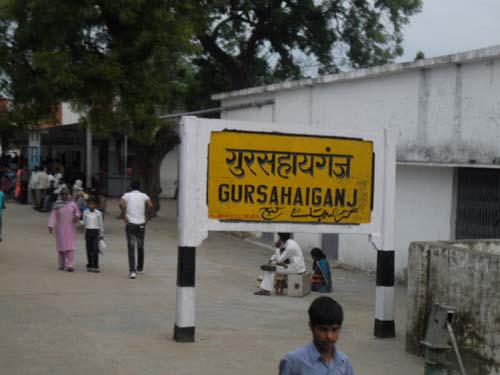
Gursahaiganj Railway Station (GHJ) Trains, Timing & Booking
Written By Thomas
Gursahaiganj Railway Station
Station Address
NH 91, Gursahaiganj
Uttar Pradesh, India
Serves Kannauj district under North Eastern Railway
Station Activity
Number of Platforms2
Halting Trains24
Originating Trains0
Terminating Trains0
A small but active stop with regular passenger and express train halts
Station Profile
Elevation147 m
TypeRegular
CategoryNSG-5
ZoneNER
DivisionIzzatnagar
Operated under North Eastern Railway serving Kannauj region
Gursahaiganj Train Schedule
Check latest arrivals and departures for GHJ station
GHJ • Gursahaiganj
Before heading to the station, it always helps to know what is actually running on time.
Use this quick access to check live train arrivals, departures, and platform updates
so you are not guessing while standing on the platform.
Opens live train timing pages in a new tab for quick access
Nearby Railway Stations
Closest
KHDP
Khudlapur
~6 km
MLKP
Malikpur
~7 km
JDA
Jasoda
~10 km
JPP
Jalalpur Panwara
~13 km
KDJ
Khudaganj
~16 km
SGRP
Singhirampur
~19 km
KJNC
Kannauj City
~20 km
KJN
Kannauj
~22 km
KLJ
Kamalganj
~23 km
YAG
Yaqutganj
~27 km
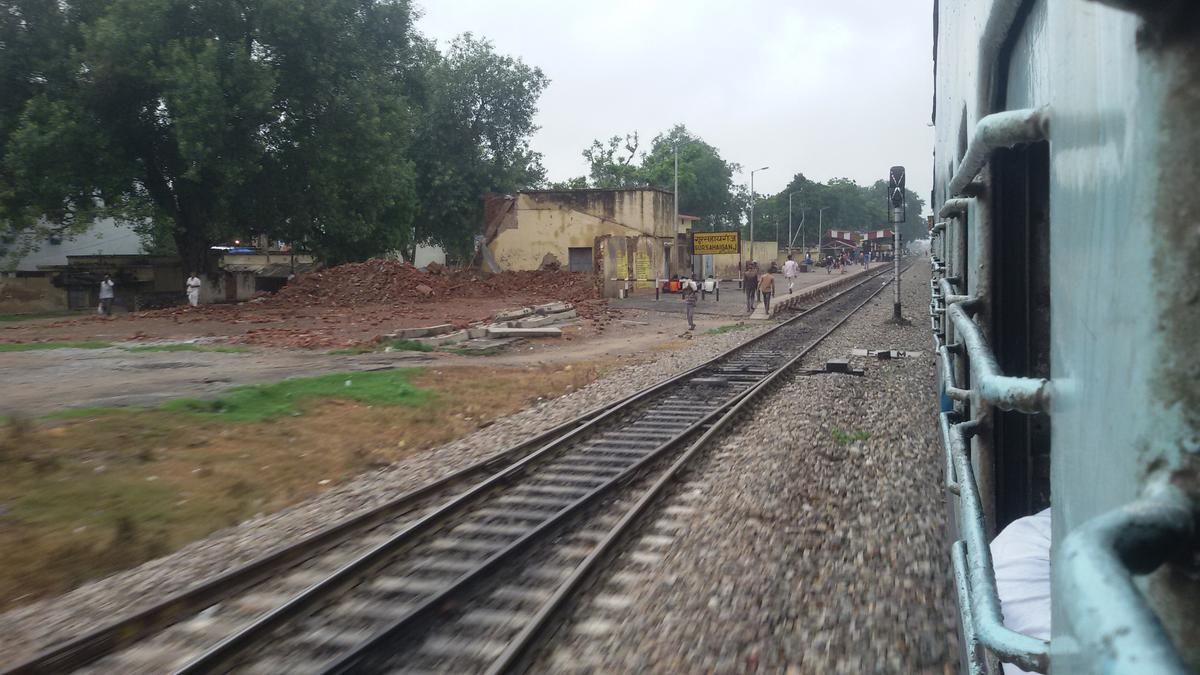
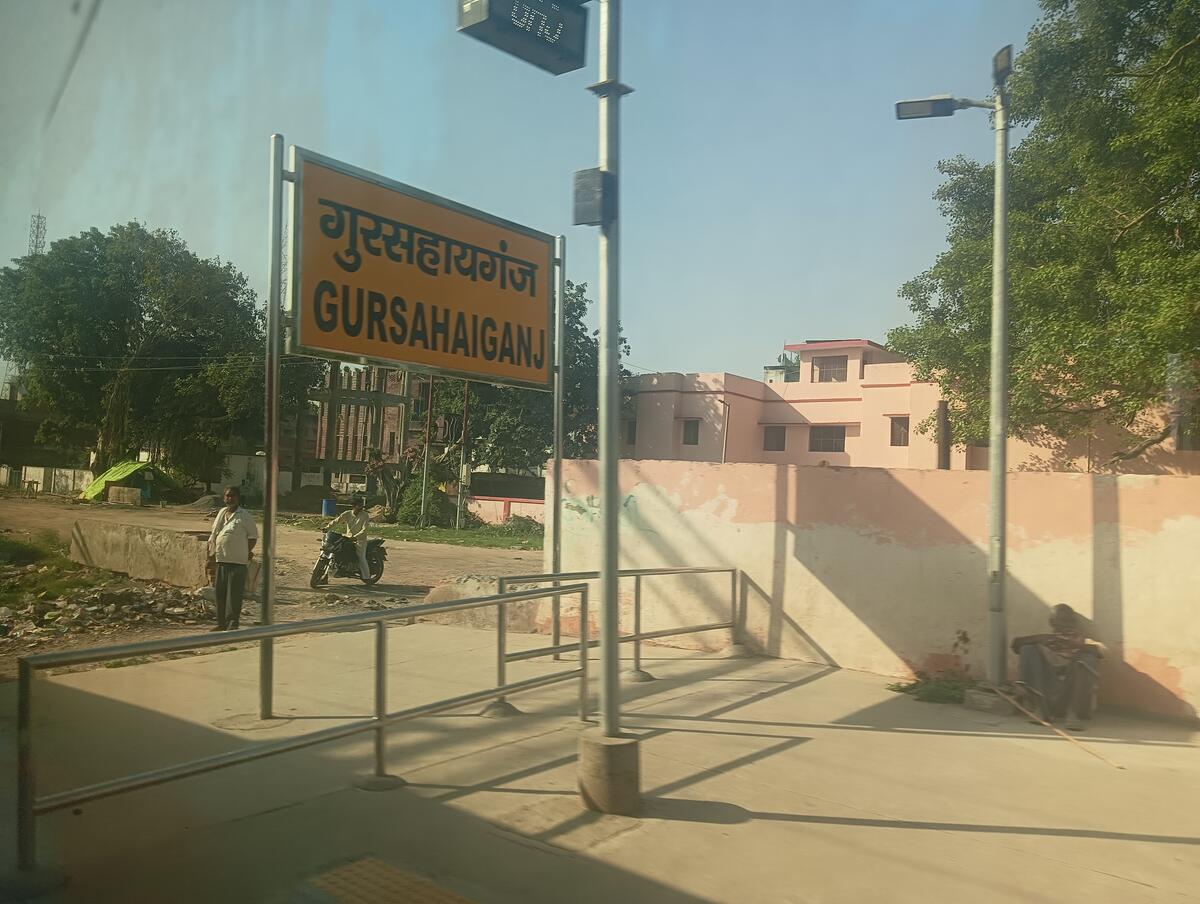
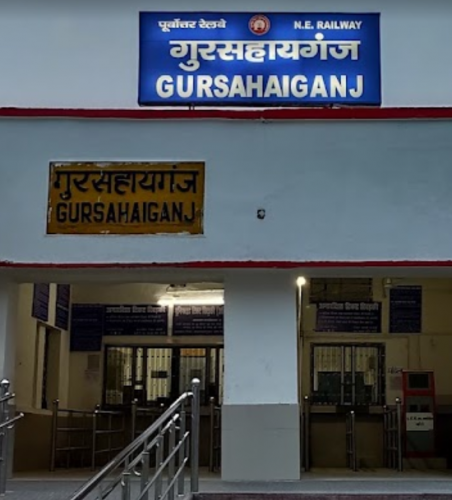
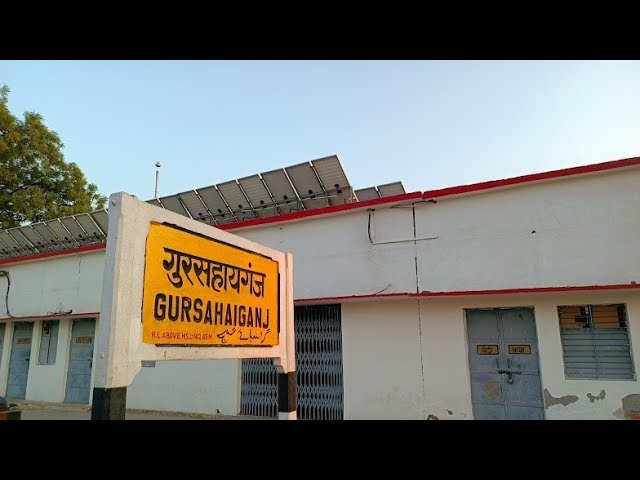
Gursahaiganj Railway Station Gallery
Real views from platforms, tracks and station surroundings
❮
❯
View
View
View
View
View
5 Photos • Real station views
×
Rail Connectivity from Gursahaiganj
Kannauj
Short-distance connection with frequent passenger trains linking nearby towns within the district
~30–40 minNearby
Farrukhabad
Direct connectivity on the same line with regular passenger and select express train stops
~1–1.5 hrsFrequent
Kanpur
Accessible via Kannauj route with connections to one of the major railway hubs in central Uttar Pradesh
~2–3 hrsMajor Hub
Lucknow
Connected through Kannauj and Kanpur routes with a mix of passenger and express services
~3–4 hrsImportant
Shahjahanpur
Regional connectivity through intermediate stations with steady passenger train movement
~2–3 hrsRegional
Bareilly
Extended connectivity via North Eastern Railway routes, linking to a larger junction city
~4–6 hrsExtended
Book Train Tickets from Gursahaiganj
Trains stopping at Gursahaiganj are fewer compared to major junctions, which means seats can fill up faster than you expect.
If you are planning a trip, it is usually better to check availability early rather than depending on last-minute options.
These platforms help you book tickets, understand confirmation chances, and stay updated before you even reach the station.
Auto rickshaws are usually available outside the station area and are the most common way to reach nearby markets, residential areas, and local roads within Gursahaiganj.
Best for short distance travel
Shared Autos
Shared autos run on fixed local routes and are widely used by daily passengers. They connect nearby villages and small towns at a much lower cost than private rides.
Budget friendly option
Local Buses
Road transport services connect Gursahaiganj with Kannauj, Farrukhabad and nearby areas. Buses may not be right outside the station, but can be reached with a short ride.
Useful for nearby towns
Private Taxis
Taxis are available through local drivers and can be arranged near the station. A good option if you are traveling with luggage or heading to another city directly.
Comfortable for longer trips
Two Wheeler Options
Bikes are sometimes available through local contacts. In smaller towns, this can be a flexible way to move around quickly where public transport is limited.
Flexible for short local travel
App Based Cabs
App-based services like Ola or Uber are not consistently available in this area. It is better to rely on autos or locally arranged transport instead.
Availability may be limited
Useful Train Tools for Gursahaiganj
Since Gursahaiganj is a smaller station, it helps to check train timing and status before you leave home.
These tools make it easier to avoid long waits and last-minute confusion at the platform.
Passenger trains form the backbone of travel at Gursahaiganj. These trains connect nearby stations like Kannauj, Farrukhabad and smaller stops in between. They halt at almost every station, which makes them slower but very useful for short distance travel and daily commuting.
Express Trains
+
A limited number of express trains stop here, providing connections to larger cities through nearby routes. These trains skip smaller stops and are the preferred option if you are traveling beyond the local region.
Intercity and Regional Trains
+
These trains connect nearby cities within Uttar Pradesh and surrounding areas. They balance speed and accessibility, making them suitable for medium distance travel without the long travel time of passenger trains.
Long Distance Trains
+
While Gursahaiganj is not a major stop for long-distance trains, some services pass through or halt briefly, allowing passengers to connect to bigger junctions like Kanpur or Lucknow for further travel.
Freight Trains
+
Freight trains regularly use this route to move goods across the region. You may not notice them immediately, but they play an important role in keeping the railway line active throughout the day.
Gursahaiganj Railway Station, with the code GHJ, sits quietly in Kannauj and does exactly what a railway station is supposed to do without trying too hard to impress. It comes under Indian Railways and is managed by the North Eastern Railway zone.
This is not the kind of place where you expect big crowds or flashy facilities. Instead, it is where daily life plays out in a very real way. People catching early trains to work, students heading to nearby cities, and small traders moving between towns all pass through here. Around a few dozen trains stop at the station, which is enough to keep things moving without turning it chaotic.
If you spend some time here, you will notice something simple but important. The station is less about travel plans and more about routine. It quietly supports the rhythm of the town without ever needing attention.
Gursahaiganj Railway Station sits in the heart of Kannauj, a district better known for its perfume trade than railway headlines. The station falls under Indian Railways and is operated by the North Eastern Railway.
What makes its location useful is not glamour but positioning. The line it lies on connects smaller towns like Kannauj and Farrukhabad to larger cities such as Kanpur and Lucknow. So while you will not see trains branching in multiple directions like a big junction, you will see something more practical. A steady stream of passengers using it as their first step toward bigger routes.
It works quietly as a feeder point. People get on here, but their journeys often stretch much further.
Historical Background and Development
There is no single dramatic moment tied to the creation of Gursahaiganj Railway Station. Like many stations across North India, it came into existence as part of the gradual railway expansion during the late colonial period and continued developing after independence.
Back then, the idea was simple. Connect towns that were economically active but not large enough to justify major infrastructure. Kannauj district, with its trade and local movement, fit that requirement.
Over time, the station grew in a very practical way. Instead of big redesigns, it saw small upgrades as traffic increased. That is why even today, it feels functional rather than modernized for show.
Station Layout and Platform Configuration
If you arrive here for the first time, you will not need a map or a long walk to understand the place. The station layout is simple, almost to the point where you might think, “That’s it?” and yes, that is pretty much it.
There are a few platforms handling passenger trains that stop briefly. The tracks are arranged to allow smooth crossings without much delay. You will not find large concourses or multiple levels. Everything is close enough that you can move from the entrance to your platform without feeling like you are navigating an airport.
In a way, it feels similar to stations like Samakhiali Junction, where practicality matters more than scale. And honestly, that simplicity works in its favor.
Passenger Facilities and Available Amenities
Gursahaiganj does not try to be something it is not. The facilities here are basic, but they are the kind people actually use. There are ticket counters for bookings and reservations, waiting areas for short halts, and drinking water available for passengers.
You will also notice small vendors selling tea and snacks, especially during busy hours. It is not a food court, but it does the job when you are waiting for your train and need something quick.
Most people here are either boarding soon or have just arrived, so the station focuses on keeping things moving rather than offering long stay comfort.
Daily Train Flow at Gursahaiganj
Morning Hours
+
Early morning is when the station starts becoming active. Passenger trains and a few express services pass through during this time, bringing in daily commuters heading toward Kannauj, Farrukhabad, and nearby towns. The platforms feel busy, but not overcrowded.
Midday Period
+
By late morning and afternoon, the pace slows down. Fewer trains pass compared to peak hours, and the station feels quieter. This is usually the easiest time to travel if you want to avoid rush and waiting crowds.
Evening Rush
+
The evening brings another wave of activity. Commuters returning home and students finishing their day make this one of the busier periods. Trains toward nearby cities tend to be more crowded during this time.
Night Hours
+
Late evening and night hours see a mix of quieter platforms and occasional train movement. Some long-distance trains pass through, but overall activity drops significantly compared to daytime.
Overall Daily Pattern
+
Gursahaiganj does not experience constant heavy traffic like major junctions. Instead, it follows a steady and predictable pattern with two main busy periods in the morning and evening, and a calmer flow during the middle of the day.
Train Operations and Passenger Flow
The number of trains passing through Gursahaiganj is moderate, often estimated to be a few dozen services including passenger and express trains. That number is enough to keep the station active without making it crowded all day.
Mornings and evenings are when the place feels alive. Office goers, students, and regular travelers create a familiar rush. Midday, on the other hand, slows down so much that you can actually hear the announcements clearly without competing noise.
It is a predictable rhythm, and regular passengers rely on that consistency more than anything else.
Operational Role and Station Significance
On paper, Gursahaiganj is not classified as a major station under Indian Railways. But if you look at how people use it, the picture changes.
It connects smaller towns to larger railway hubs, reduces the need for long road travel just to catch a train, and keeps daily movement affordable. Without stations like this, passengers would have to depend entirely on bigger cities, which would make simple journeys much more complicated.
So its importance is not in size, but in how often it gets used.
Accessibility and Passenger Navigation
One thing you will notice quickly is how easy it is to navigate. There is no confusion about where to go, no endless corridors, and no complicated signage. You enter, you find your platform, and you board your train.
For local passengers, this saves time every single day. Even if you are new, you will figure things out within minutes. Outside the station, auto rickshaws and small local vehicles are usually available, connecting nearby areas without much waiting.
It is the kind of place where movement feels natural rather than managed.
Future Development and Upgrade Potential
Gursahaiganj Railway Station is unlikely to turn into a large junction anytime soon, and it does not really need to. Future improvements, if they come, will probably focus on small but meaningful upgrades like better lighting, cleaner platforms, improved shelters, and clearer digital information displays.
These are the kinds of changes that matter more to daily passengers than big structural overhauls. As regional travel continues to grow, stations like this will become even more important, not because they are expanding rapidly, but because they already fit into people’s everyday lives so well.
Frequently Asked Questions
Where is Gursahaiganj Railway Station located
+
Gursahaiganj Railway Station is located in Kannauj district of Uttar Pradesh. It serves the town of Gursahaiganj and nearby rural areas.
What is the station code of Gursahaiganj
+
The station code is GHJ. This code is used while booking tickets, checking train schedules, and tracking train status.
How many platforms are there at Gursahaiganj Railway Station
+
Gursahaiganj Railway Station has a small number of platforms, typically around two, which are enough to handle passenger and express train halts.
Which cities are connected from Gursahaiganj
+
The station connects to nearby cities like Kannauj and Farrukhabad, and through connecting routes, passengers can reach larger cities such as Kanpur and Lucknow.
Is Gursahaiganj a busy railway station
+
It is not a crowded junction, but it stays active with regular passenger movement. The station is usually busiest during morning and evening hours.
Are basic facilities available at the station
+
Yes, basic facilities like ticket counters, waiting areas, drinking water, and small food stalls are available for passengers.
What transport options are available outside the station
+
Auto rickshaws and shared autos are commonly available near the station. These connect the station with nearby markets, residential areas, and surrounding towns.